Everybody turns left.
Menu boards, websites and party booking built for roller rinks and the places families spend their Saturdays.
The board knows what you're out of.
A printed board starts lying the moment the last Bomb Pop goes. This one doesn't. Someone taps once at the counter and every screen agrees — greyed out, struck through, red sash across it.
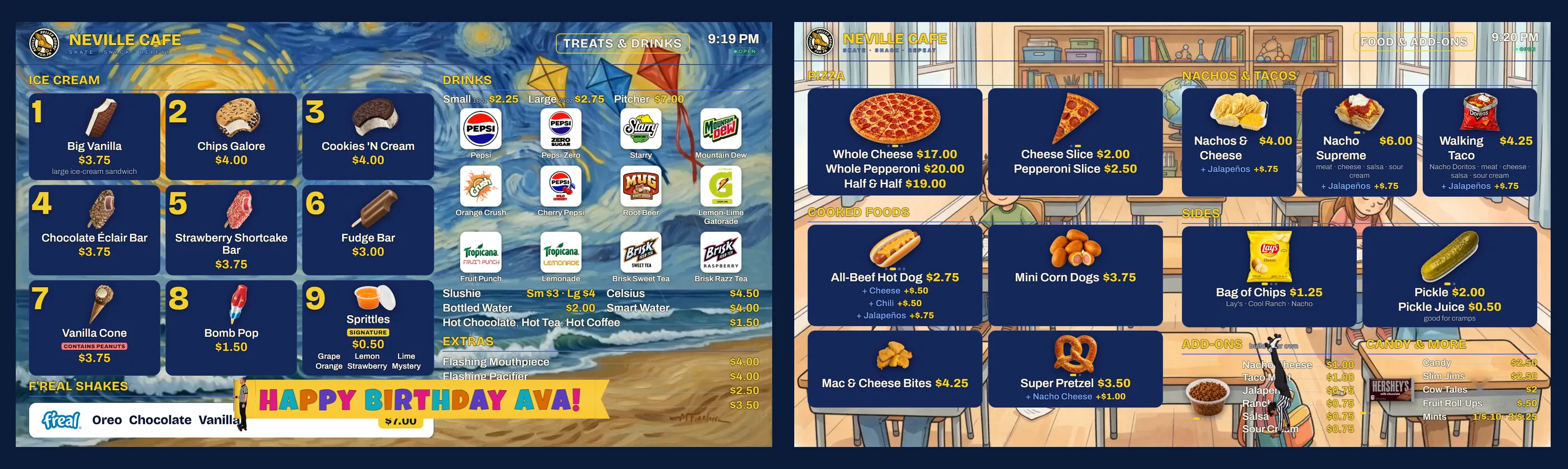
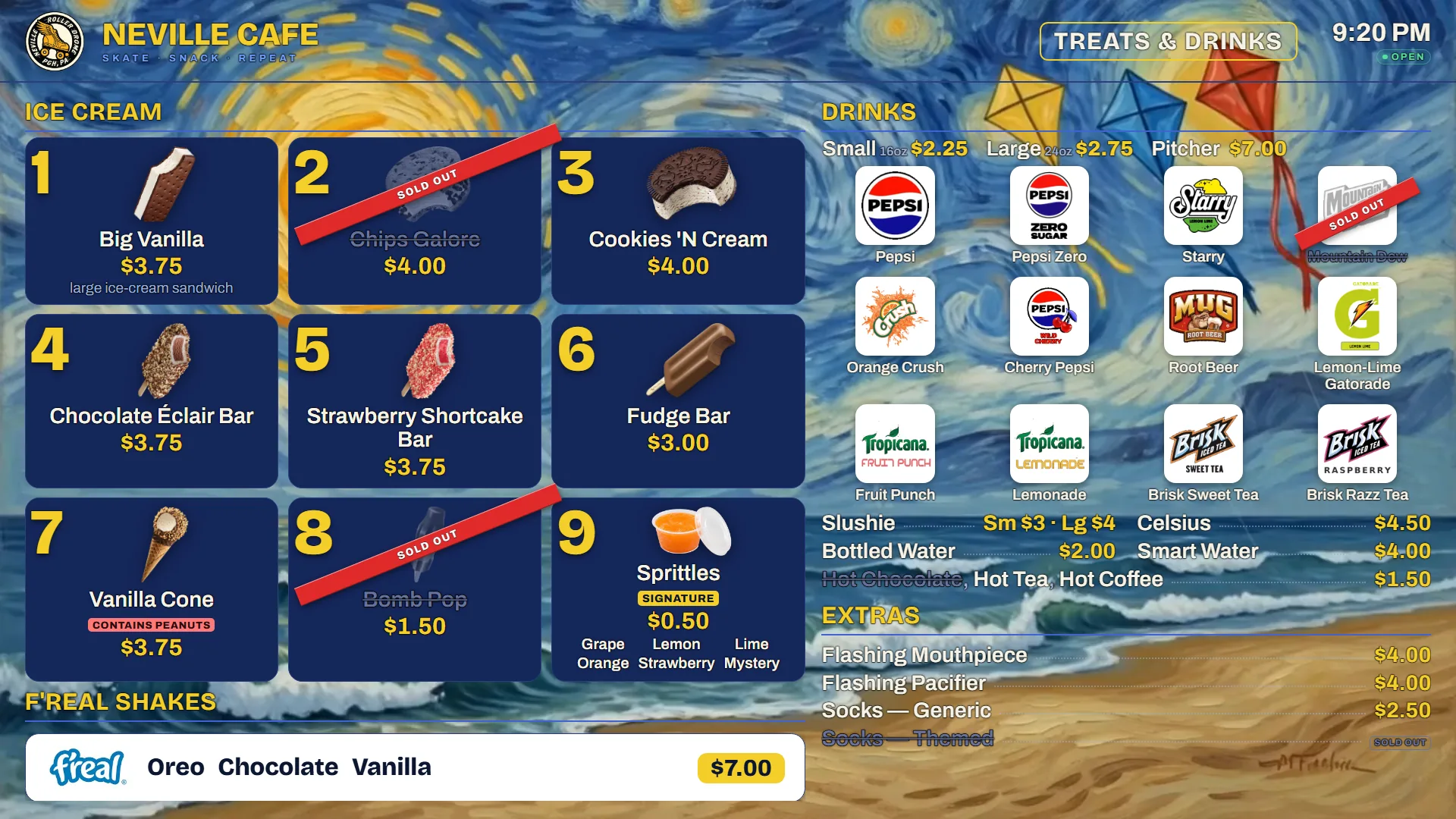
Sold out, the second it's sold out
Not a sign taped over the menu. The item greys, the price strikes through, and a sash goes across it — readable from the back of the queue.
Per-flavour too: run out of blue raspberry and only that flavour goes, not the whole item.
Out in one tap
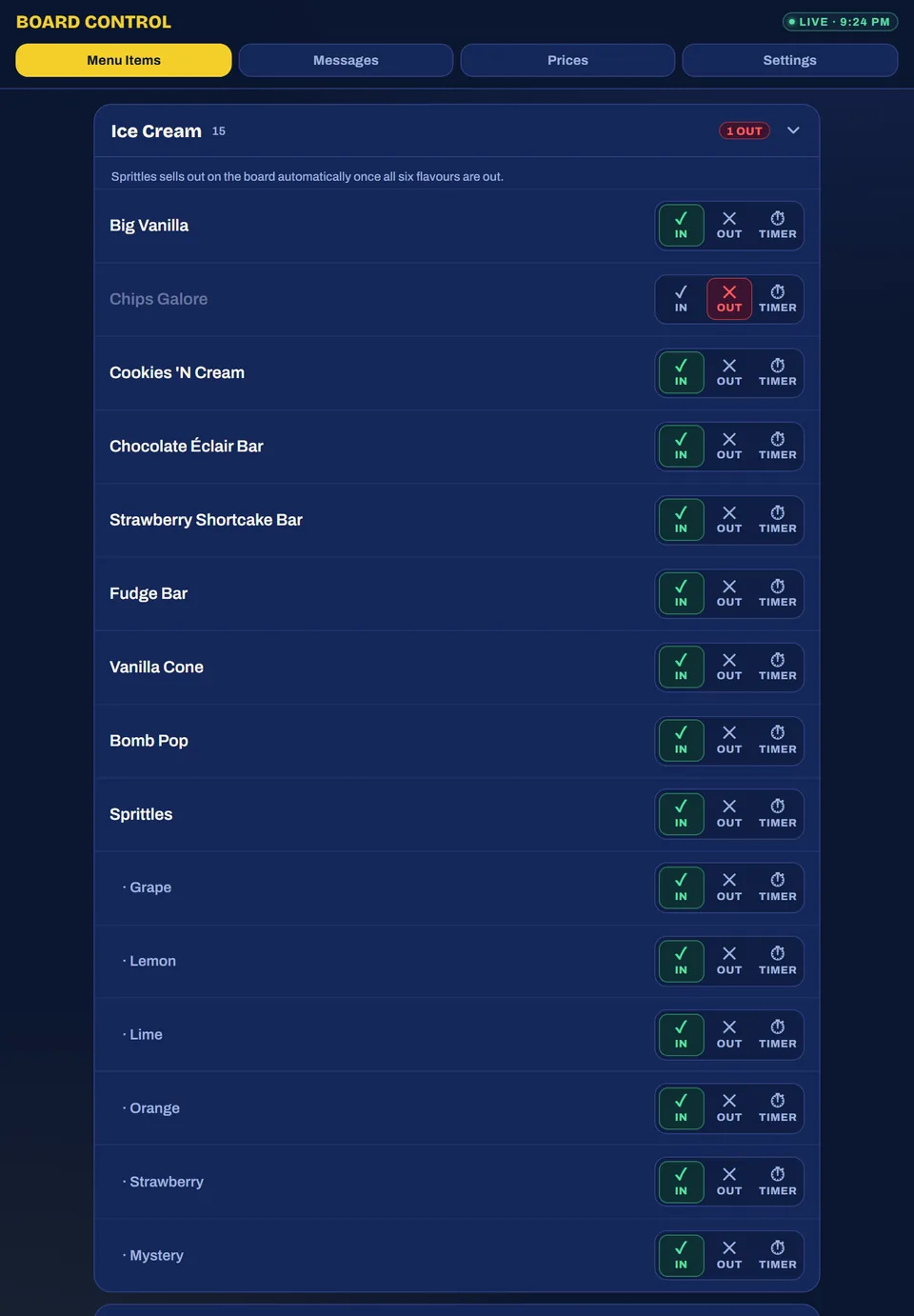
Every item has IN, OUT and TIMER beside it, on the iPad already sitting at the counter. The screens catch up on their own.
Timers that clear themselves
Waiting on a fryer? Set twenty minutes. The board counts it down and puts the item back without anyone remembering to.
One tap can take six things with it
Mark nacho cheese out and the hot dog with cheese, the pretzel with cheese and the nachos go out too. Nobody has to know the whole menu.
The log knows who
Everyone gets their own PIN on the shared iPad, so the record says which person marked the nachos out at seven, not which tablet did.
It doesn't go dark
Each screen runs off its own disk. Lose the internet and it keeps showing the last thing it knew, instead of a blank TV over your counter.
Prices change from the same screen
Put a price up for the weekend and back down on Monday. No reprinting, no vinyl letters, no ladder.
Built for whoever is on shift
The dashboard is one screen with your whole menu on it and three buttons per row. No training, no manual, no app to install — it opens in the browser on the iPad you already have.
Each person types their own PIN, the way a register works. That's what makes the history worth having.
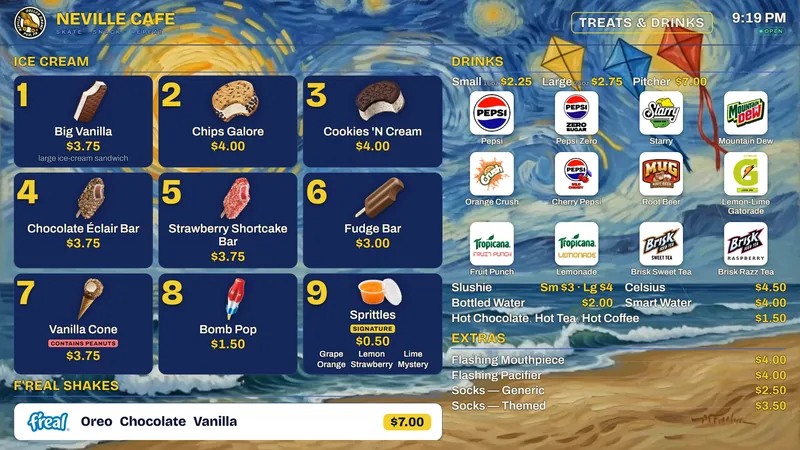
It shouldn't look the same in October as it does in July.
Backgrounds and characters are how the board stops being signage and starts being part of the room. Pick from the catalogue, or have something drawn for your rink.
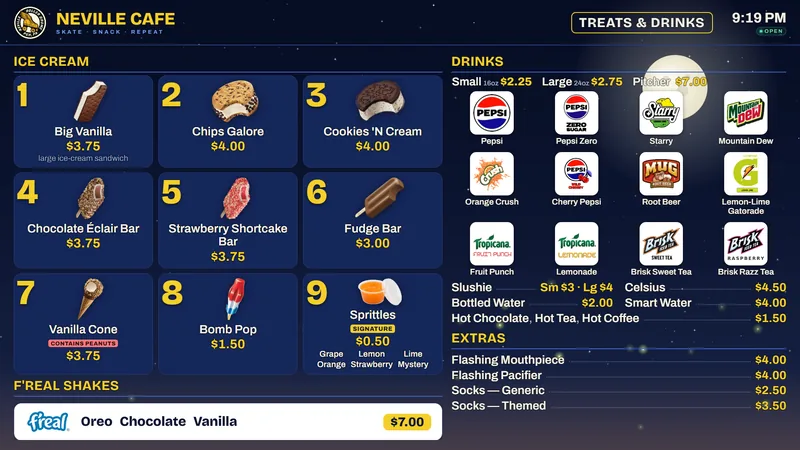
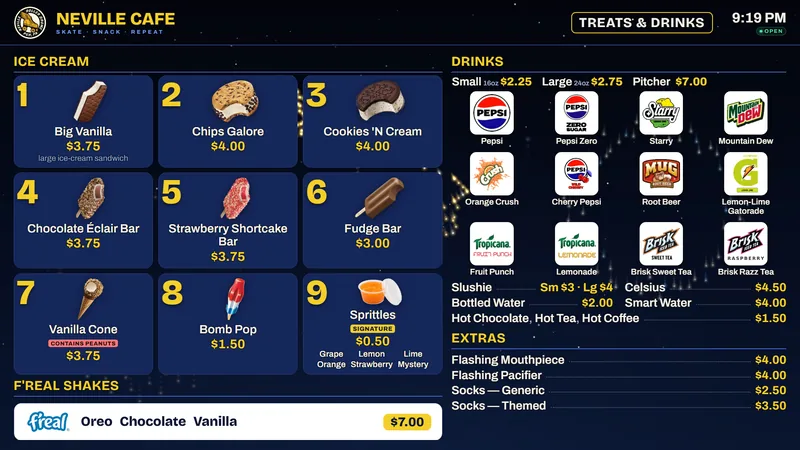
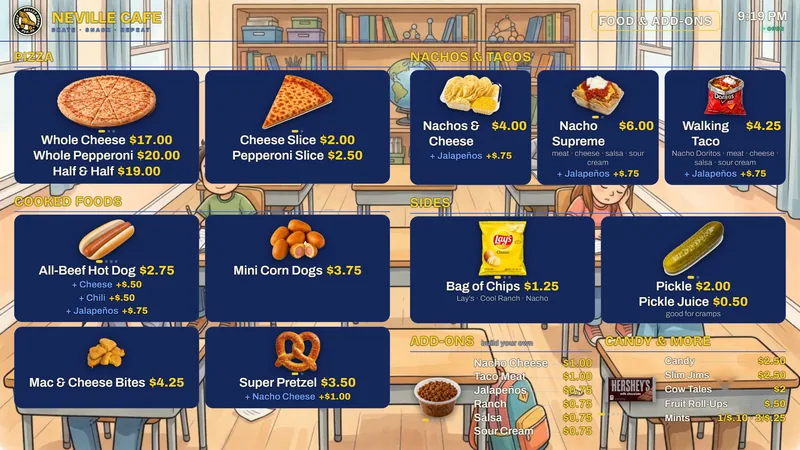
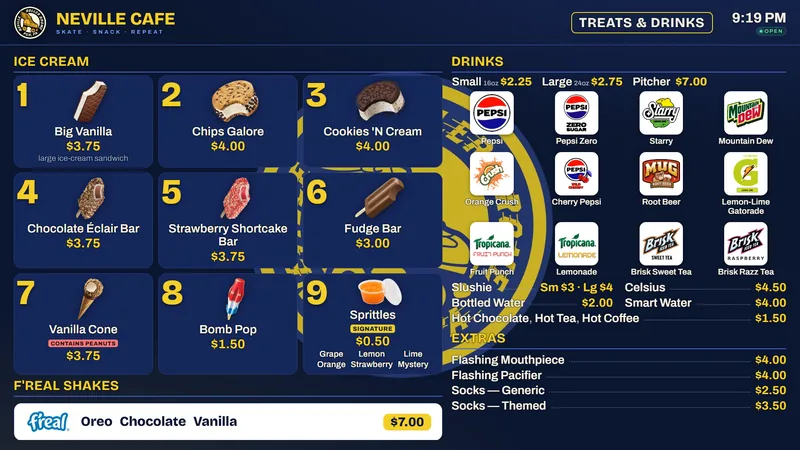
Characters that skate across the menu
Sprites cross the screen on their own schedule — a mascot, a staff favourite, somebody's dog. Kids watch for them. Custom ones get drawn from a photo.
Banners work the same way: a birthday name in the colours and lettering you pick, up for the session and gone afterwards.
A site that knows what time it is.
Most rink sites are last season's schedule in a PDF and a phone number. Yours tells someone standing in their kitchen whether you're open right now.
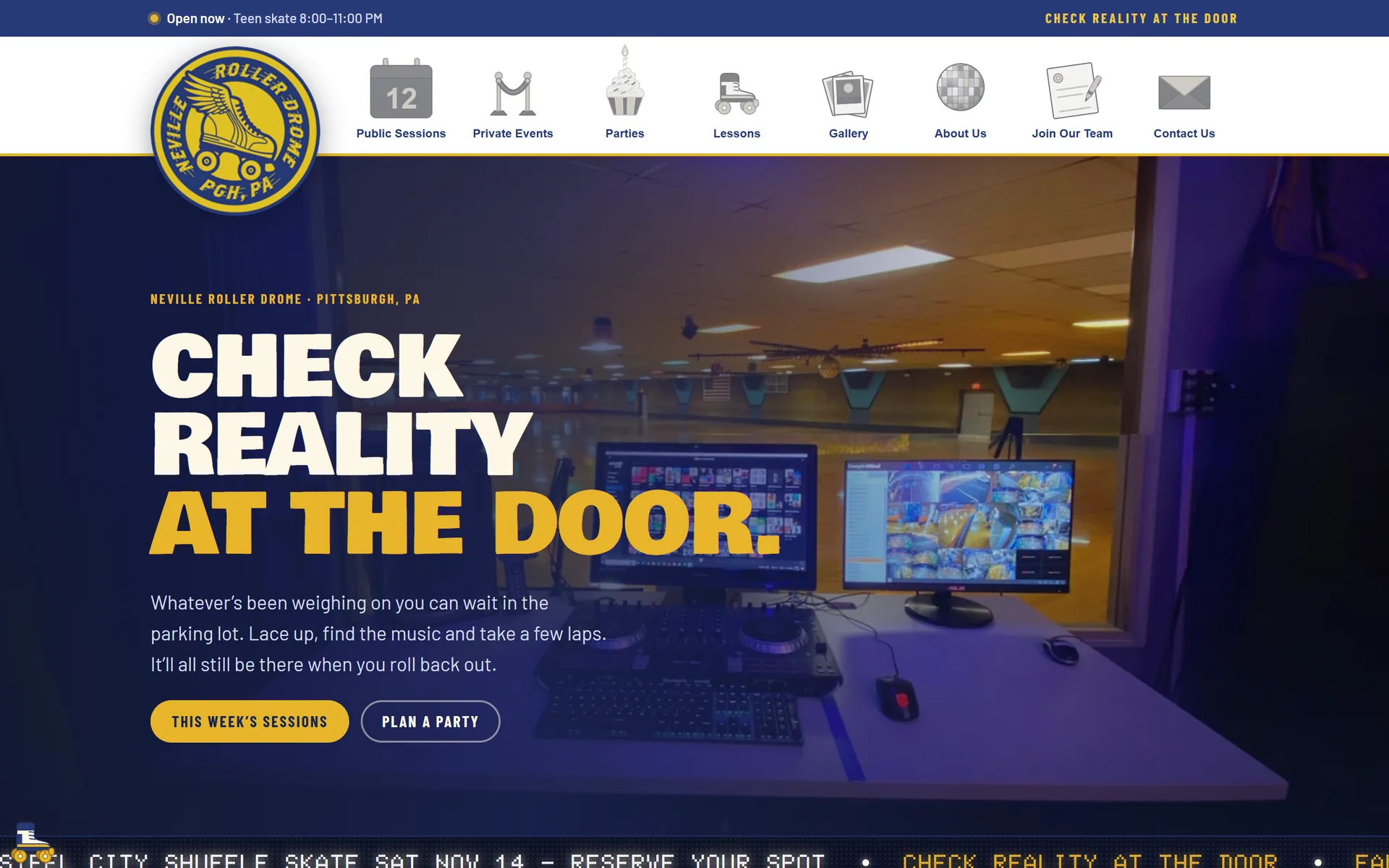
It knows what time it is
A live bar across the top says whether you're open right now and what session is running, taken from the same schedule as everything else.
Events without a rebuild
This month's events come from one small file. Add a Dolly Parton skate night and it appears on the homepage and in the ribbon.
One place for the schedule
Sessions, times and prices live in one spot, so the header, the table and the footer can't disagree with each other.
Drawn, not bought
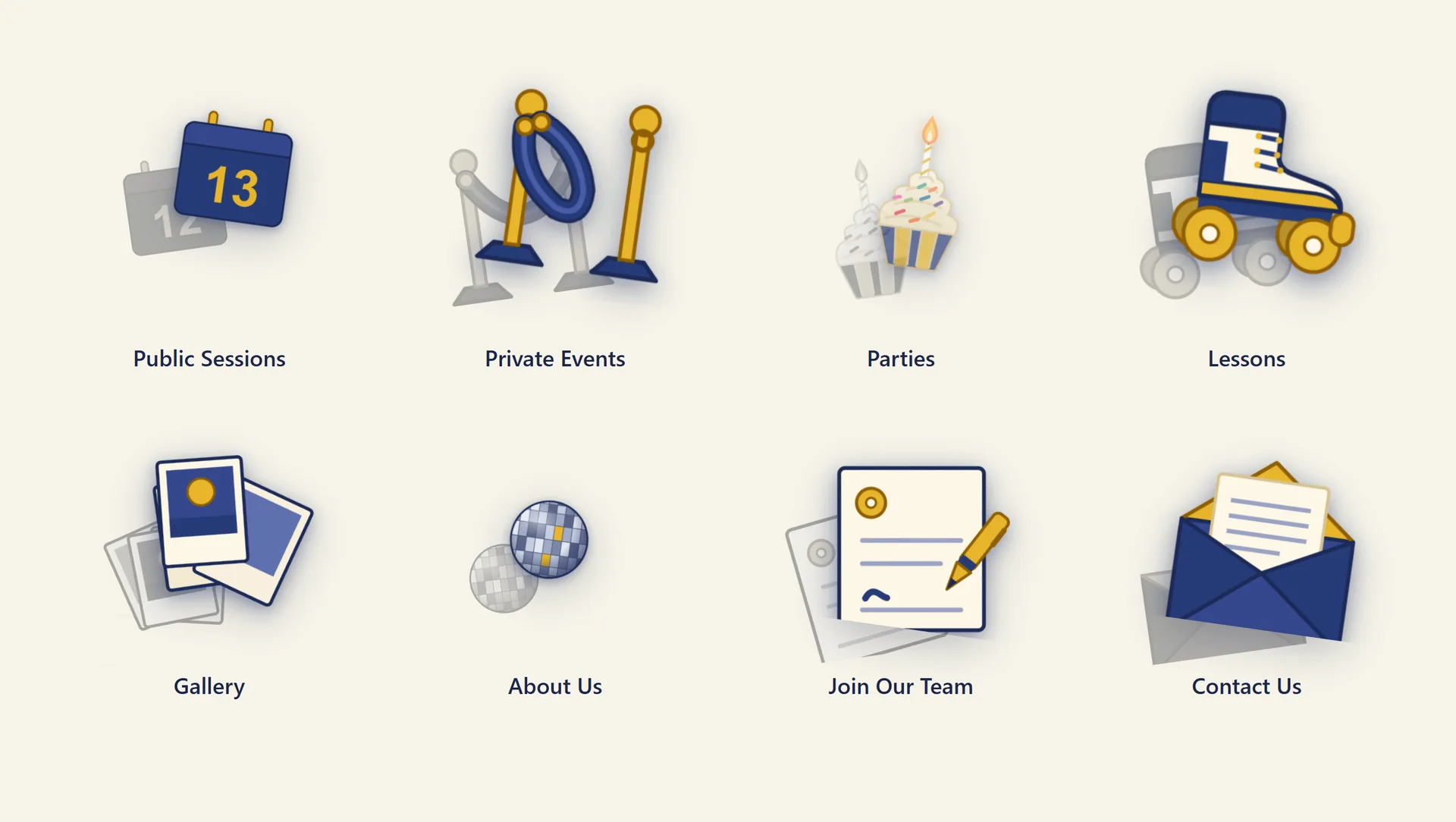
The icons are illustrated for the rink rather than pulled from a stock set, and come alive as you move across them.
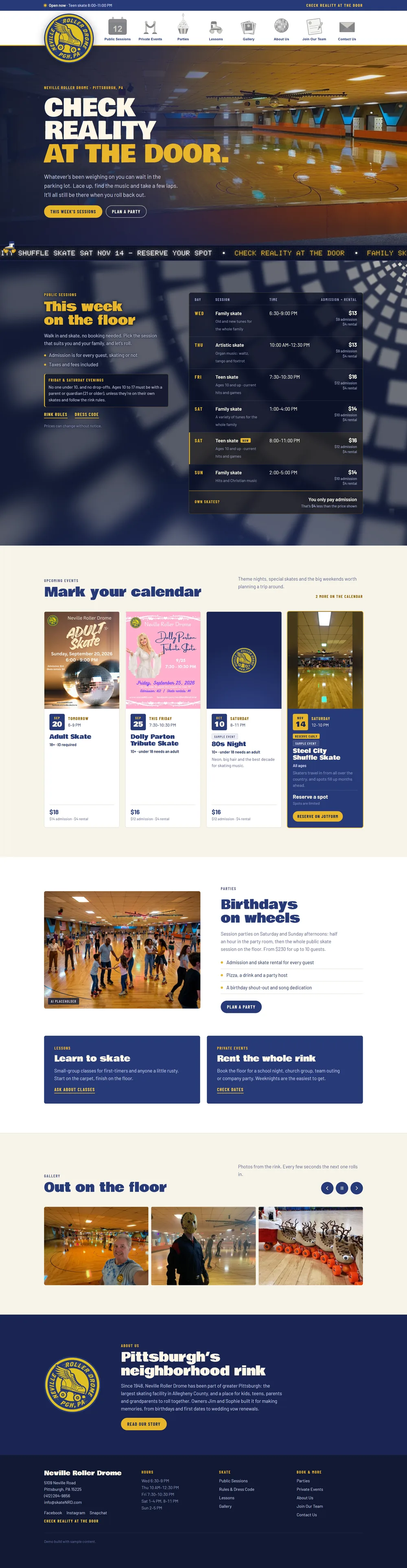

The same pages on a laptop and a phone. Most of your visitors are on the phone, in the car, deciding where to take four children on a Saturday.
Icons drawn for the rink
Eight of them — sessions, private events, parties, lessons, gallery, about, jobs, contact. Grey until you reach for them, then they light up in the rink's own colours.
Fill the room without the phone ringing.
Parties are the best margin in the building and the most annoying thing to schedule. A parent picks a slot, pays, and gets a confirmation — while you're on the floor.
Two parties can't take one room
Each slot can be claimed exactly once. The guard is structural, not a reminder to check the calendar.
Only the slots you actually run
Saturday and Sunday afternoons, a fixed number per session, each picking a room window — the rules you already have, enforced automatically.
Closures without a developer
Shut for a holiday? Put it on the closures calendar and the affected slots stop being offered.
Paid at the time of booking
The deposit is taken when the slot is claimed, so a held room is a paid room.
Booking comes with a site rather than on its own — the party page and the schedule have to agree with each other, and that only works if they're the same system.
Scaled to your building, not a price list.
A two-screen rink and a six-screen entertainment centre are not the same job, so they don't cost the same. Here's how it's structured — the numbers come out of a fifteen-minute conversation about your room.
Menu boards
A one-time setup — hardware, your menu built out, a walkthrough with your staff — then a monthly that scales with how many screens you're running.
- Extra backgrounds
- Seasonal background pack
- Stock sprites
- Custom sprite, drawn to order
Websites & booking — two ways
Build fee, then a flat monthly. You own it outright, the monthly covers hosting, updates and the booking system.
Nothing up front, nothing monthly. We build and run the site at no cost to the rink, and take a share of each party booked through it. If the room doesn't fill, it costs you nothing — which is rather the point.
Tell me about your rink.
How many screens, what your Saturdays look like, what's currently held together with tape. I'll tell you what I'd do and what it would cost, and if a menu board isn't your problem I'll say that too.